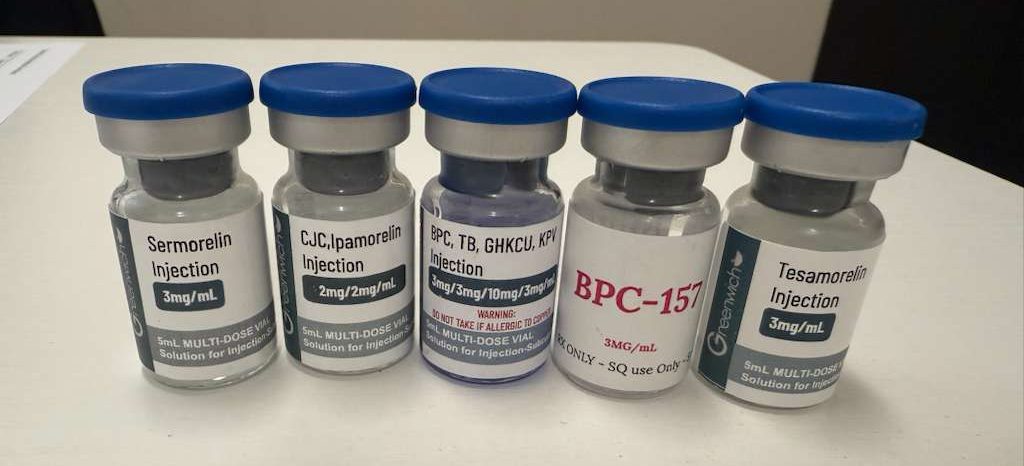
TB-500 + BPC-157 PEN in laboratory procedures In laboratory models TB-500+BPC-157 PEN can be used as a reagent to study cell migration, fibroblast activity, angiogenesis, adhesion, tissue remodelling and cellular response under controlled conditions
The ~1-2 mg/mL serum figures circulating in community sources are DIY formulation conventions, often borrowed from how GHK-Cu cosmetic serums are mixed, rather than results of any AHK-Cu human study
How Methylcobalamin Injection Works Mechanism of Action in the Body The function of methylcobalamin involves providing methyl groups for biological functions such as DNA production, cell renewal, and nerve activity support
Even yet, more study is required before FMT may be used to treat depression
CBS News Establishing protocols: If the FDA requires ongoing data collection or formal clinical pathways to maintain compounding access, it will incentivize structured research into dosing, bioavailability, and long-term toxicity rather than relying solely on anecdotal claims
Structurally, BPC-157 is notable for a proline-rich backbone (five Pro residues, including a Pro-Pro-Pro triad) together with two acidic Asp residues, one Glu, a single basic Lys, and a hydrophobic C-terminal Leu-Val motif, giving the sequence a distinctive residue distribution relevant to secondary-structure modeling, chromatographic behavior, and mass-spectral fragmentation patterns