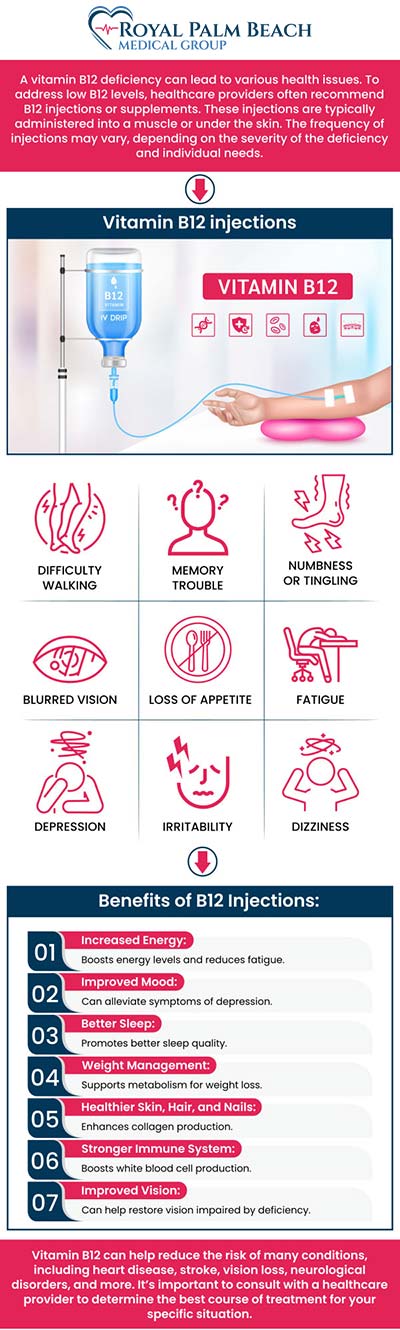
Vitamin B12 shot may be prescribed to prevent or treat the following: Pernicious anemia (a condition in which there are low red blood cell counts due to an abnormality in B12 absorption by the intestines) Megaloblastic anemia (a type of anemia in which there are very large red blood cells called megaloblasts) Cognitive disorders, such as dementia (a disorder characterized by problems with memory, problem-solving abilities, language, etc.) Disorders that affect B12 absorption, such as pancreatic diseases, intestinal infections, Crohns disease, and tropical sprue Cardiovascular disease risk (by lowering blood homocysteine levels, which is a compound associated with an increased risk of heart problems) Multiple sclerosis symptoms Bells palsy recovery B12 deficiencies related to: Weight loss Vegan or restrictive diets Surgery to remove the part of the stomach or the ileum (the last part of the small intestine) Energy and endurance What are signs of vitamin B12 deficiency

Nothing here is medical, dosing, or therapeutic guidance
Individuals with methylation issues, such as those with MTHFR variants, might respond differently to NNMT inhibition
"Vitamin B12 deficiency among adult diabetic patients in Uganda: relation to glycaemic control and haemoglobin concentration"
Tingling or flushing with very high doses of B3 or B6 (uncommon in clinical settings with proper dosing)
The amount of water you add determines the concentration, which affects how much liquid you draw up for each dose






.png.jpg)